About Me
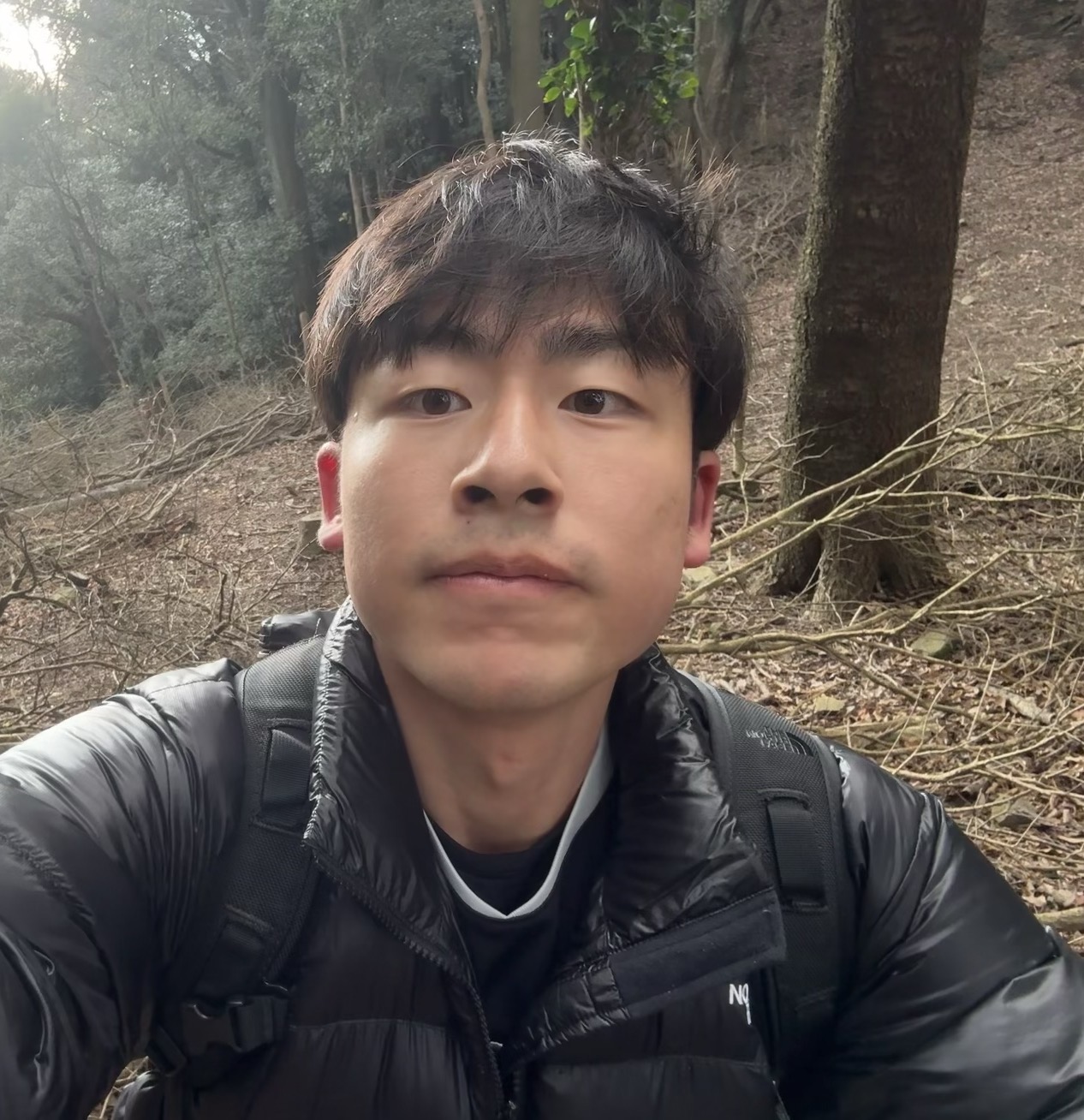
Tianhao Ma is currently a second-year M.E. student at the University of Tokyo, under the supervision of Prof. Masashi Sugiyama and Prof. Takashi Ishida, and collaborates with Dr. Gang Niu. He received his B.E. degree from Jilin University under the supervision of Prof. Ximing Li.
His current research focuses on trustworthy machine learning, particularly LLM reliability and safety. He previously worked on statistical machine learning and weakly supervised learning. Outside of research, he is an amateur football player, a China National Second-Class Athlete, and a National Level-3 Football Referee.
If you are interested in discussing with me, feel free to drop me an email (matianhao2120 at g.ecc.u-tokyo.ac.jp).
Furthermore, I am currently seeking PhD positions and am open to discussing potential research opportunities.
I do not know whether my research can match what AI scientists produce, whether continued research training will help me keep pace with them, or how long I will stay in research. What I do know is that research has brought me a great deal of joy, and I cherish and enjoy the work I get to do now.
Publications
Reliable LLM
I am transitioning from classical statistical machine learning toward frontier research on large language models (LLMs), with diffusion language model watermarking as my first exploration in this direction.
-
DenMark is the first robust semantic-level watermarking framework for diffusion language models. It uses one-step completion lookahead to progressively accumulate watermark signals in semantic embedding space rather than at the token level, enabling semantic watermarking under any-order, highly parallel generation where autoregressive rejection sampling does not directly apply. Across the 27 semantic-attack settings in the main table (three DLMs, three datasets, and three attacks), DenMark ranks first on every reported detection metric, with 80.76% mean TPR at 1% FPR—44.77 percentage points above the strongest baseline by mean TPR (PatternMark).
Weak Supervision / Statistical ML
Learning from Label Proportions (LLP)
From my bachelor's through my master's studies, my LLP research has evolved from empirically driven algorithm design in pursuit of state-of-the-art performance to studying the problem's underlying statistical structure. I use that structure to reformulate the learning task and derive principled optimization objectives, while testing whether these ideas deliver meaningful gains in practice.
-
Under relatively realistic assumptions, bag-level class counts follow a Poisson multinomial distribution (PMD). Since computing the PMD directly is costly, we use a tractable multi-order empirical moment-matching objective to capture more distributional information. The method achieves strong results on semi-real and synthetic datasets.
-
We reformulate LLP as an auxiliary proportional value classification task rather than fitting bag proportions directly. By connecting the posterior probabilities of bag-level proportional values with instance-level label posteriors, the method learns a more discriminative classifier and mitigates over-smoothing, with theoretical guarantees and strong empirical results.
-
We use dual entropy-based weighting to identify high-confidence pseudo-labels and form an auxiliary instance-level loss, which is jointly optimized with the bag-level loss. Averaged equally across five datasets and five bag sizes (25 benchmark settings), the method improves accuracy by 9.13 percentage points over LLP-VAT and 17.99 percentage points over ROT.
-
LLP-DC uses minimum-cost maximum-flow optimization to find the highest-confidence hard pseudo-label assignment that exactly matches each bag's class proportions. It combines instance-level training on these labels with bag-level proportion matching, enforcing proportion constraints at both levels. Experiments across benchmark datasets and bag sizes show consistent improvements over existing LLP methods.
Partial Multi-Label Learning (PML)
-
We reformulate the risks for Hamming loss and ranking loss using first- and second-order strategies and derive unbiased estimators without either requirement. We establish consistency and estimation-error bounds, and experiments on real-world and synthetic datasets show strong performance against state-of-the-art methods.
*Equal contribution (co-first authors)
Collaborative Publications
-
Learning from Use: Test-Time Learning in Large Language Models and Agents
Weihao Xuan, Qingcheng Zeng, Jiarui Liu, Rui Yang, Yunze Xiao, Yinxi Li, Zeqi Zhou, Weiwei Sun, Heli Qi, Leyang Cui, Tianhao Ma, Hanqun Cao, Junjue Wang, Tianyu Liu, Weihua Du, Yueqi Song, Jiayi Geng, Matthew Yu Heng Wong, Rob Voigt, Chuan Hong, Xiang Yue, Jen-tse Huang, Xuhai Xu, Yifan Peng, Pheng-Ann Heng, Yiming Yang, Bernhard Schölkopf, Zhijing Jin, Nan Liu, Naoto Yokoya, Mona Diab
PDF
Honors and Awards
I began studying computer science and AI in the third year of my undergraduate studies and did not receive many academic awards.
-
High School Football: Yunnan Provincial Campus Football Tournament — 1st Place, 2019
More achievements
- Yunnan Provincial Campus Football Tournament — 5th Place, 2018
- Kunming U17 Football Championship — 3rd Place, 2019
-
University Football: Jilin Provincial Collegiate Football Championship Super Division — 5th Place, 2021
More achievements
- Jilin University 11-a-Side Football Tournament — 2nd Place, 2021
- Jilin University 11-a-Side Football Tournament — 1st Place, 2023
- Jilin University 5-a-Side Football Tournament — 3rd Place, 2023
Educations
- 2025.04 - 2027.03 (expected), Master, Computer Science, University of Tokyo, Tokyo.
- 2020.09 - 2024.07, Bachelor, Cyberspace Security, Jilin University, Jilin.
Invited Talks
- Top Conference Session on Learning Theory and Its Applications, Forum on Information Technology (FIT 2026), Kitakyushu, Japan, Sep. 2026.
Academic Services
- Conference Reviewer: ICLR 2027; NeurIPS 2026